
This, Too, is Fuel
Channeling the bad (and the good). AND: An icy Glück poem warms a New York Times critic; a secret gospel; the secret (and shitty) past of a great novelist inspires much more than a movie.

Welcome to This Week Paul Likes.
Every week, I throw out hits of inspiration—three recommendations, one tip, one quote—from the writers who inspire me, in the hope they’ll inspire you to do your best work.
Subscribe below if it’s your first time to the party. Let’s start with the recommendations.
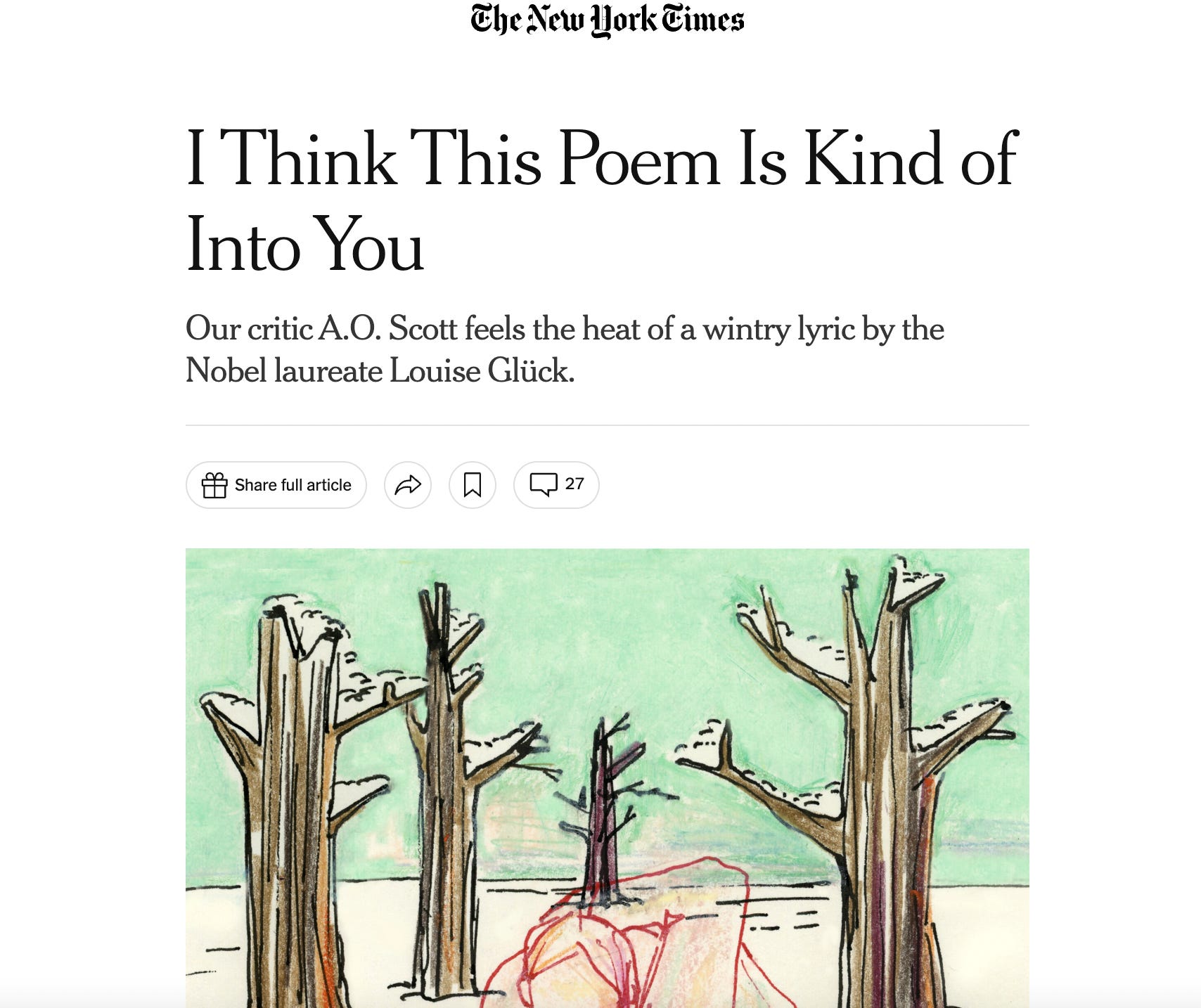
…“I Think This Poem is Kind of Into You”: The Times’ A.O. Scott breaks down why Louise Glück’s “Early December in Croton-on-Hudson” works. To say a Nobel Laureate’s poetry is good is to say it is indeed cold in Croton-on-Hudson in early December. What makes Scott’s piece worth your attention, then, is its interactivity.
It’s a parallax feature.
The former magazine editor in me loves a good parallax piece, where different objects move into the fore- and background of the reader’s screen as she moves through it. In Scott’s piece, stanzas from the poem reappear as Scott explains his love for them.
But don’t read the piece for its technological prowess. Your time will be well spent because of how Scott executes what my old English professors called a Close Read.
I love a good Close Read even more than a parallax feature. In a Close Read, you go through a story once and discuss it, then a second time and discuss it again, and sometimes a third read with a third discussion.
When in my undergraduate years we Close Read For Esmé — With Love and Squalor I experienced something like my life’s calling. If I spend the rest of my days attempting to execute what Salinger does here, I will live a fulfilling life.
That’s the power of a great Close Read.
I won’t give away too much—and won’t oversell it—but will say A.O. Scott knows a Close Read’s resonance, too.
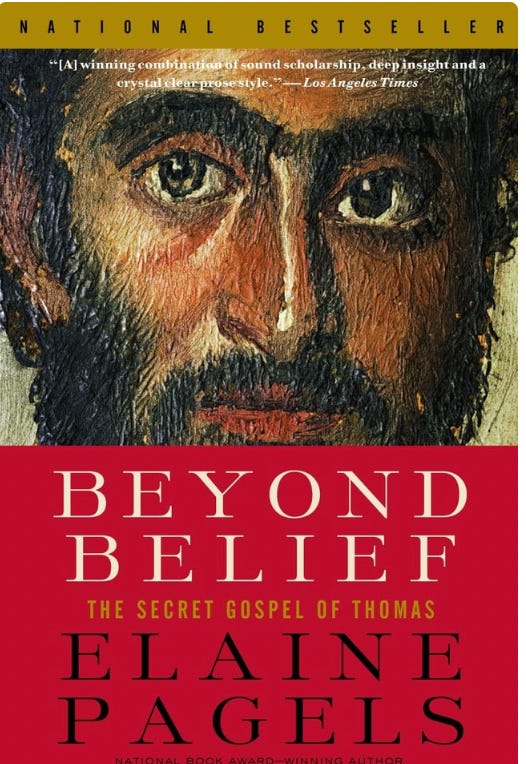
…Beyond Belief: The Secret Gospel of Thomas: I’ll begin to write the proposal for Book No. 4 early next year and it’ll expand upon this piece and the intersection of Christianity and psychedelics.
To prep, I’m reading much deeper into my own faith. Elaine Pagels’ Beyond Belief is worth a read even if you’re not a Christian.
It’s in some sense a history of first- and second-century Palestine as it fit within and fought against the Roman Empire. The book shows as well how non-canonical and gnostic texts like The Gospel of Thomas—texts you may not know of in 2025—were very much in circulation among the earliest Christians, framing how they viewed Jesus when set against, say, the gospels of Matthew or Luke.
Pagels believes The Gospel of John was, in fact, a refutation of Jesus’ teachings in The Gospel of Thomas.
To know this history is to shift how you view the present—again, even if you’re not a Christian. It may seem nerdy or at least niche but Pagels’ books are so worth your while.
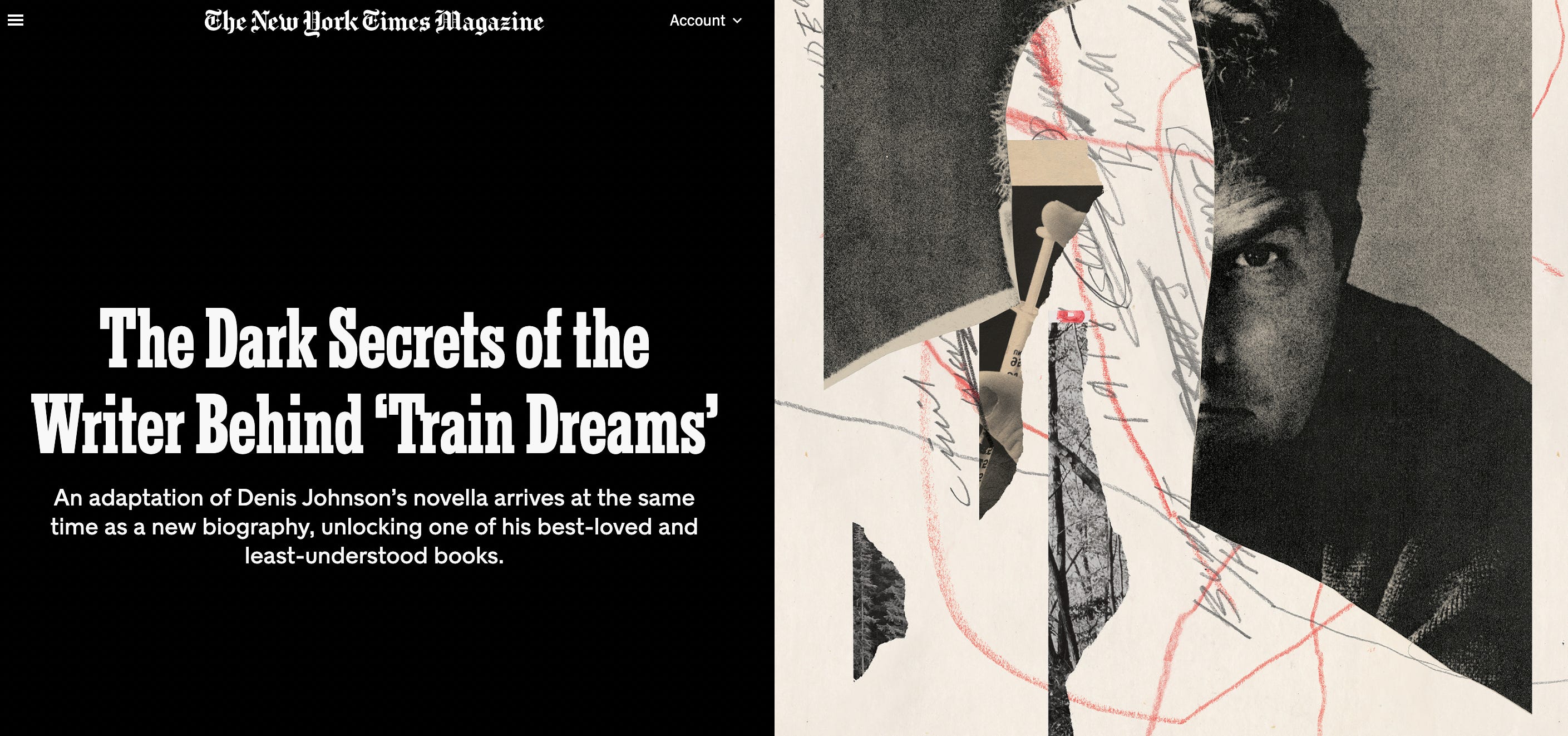
…“The Dark Secrets of the Writer Behind ‘Train Dreams’”: Last week I said Train Dreams was the best movie of the year.
This week I’ll say the author on whose story it’s based was a shit head.
That’s the only conclusion to reach about Denis Johnson. That, and Johnson seemed to realize it, too.
By the time he wrote Train Dreams Johnson was in his late 50s, an accomplished novelist who’d also, as a much younger man, beaten up the mother of his son, drank his way through the boy’s birth, and abandoned him after it.
Wyatt Williams essay about Train Dreams channels Johnson’s journal entries, full of regret for the young man he’d been and unsure how to reconcile his memories with his middle-aged life, much less reach out to his now-adult son or former wife.
Williams argues the pain Johnson felt in that moment becomes the art of Train Dreams.
Without ever excusing Johnson’s behavior, this essay is deeply moving.
This Week’s Tip for Longform Writers: Everything is Fuel
I won’t excuse Johnson’s behavior, either. I will say what you may know and what needs to be repeated even if you do, because we so often think our lives are not interesting and not worth sharing.
Everything that happens to you, everything good, and certainly everything bad, is fuel for your writing.
Does that mean writing personal essays about your experiences? Yes, it does mean that. Bleed on the page.
Does that mean accentuating your life experiences in fiction, in poems, in song lyrics?
Yes.
Does that mean using your life as your north star, guiding what you report on as a journalist or nonfiction author?
Yes. The stories worth telling begin with you understanding the story of yourself, even when you don’t use the word I in your reported pieces.
Why do this? Whatever your genre, why start with yourself as a means to explore what to write about?
Because so few people do it. I’m convinced of this. The pablum of journalism, the shitty movies in your Netflix queue, the books you begin and quit—I believe they all carry a common strain.
They were written by someone who didn’t have the confidence to look inward or the training to turn that inner life into art.
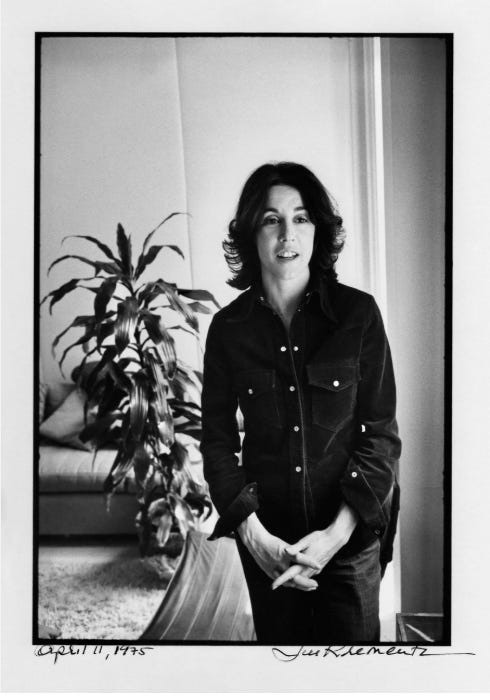
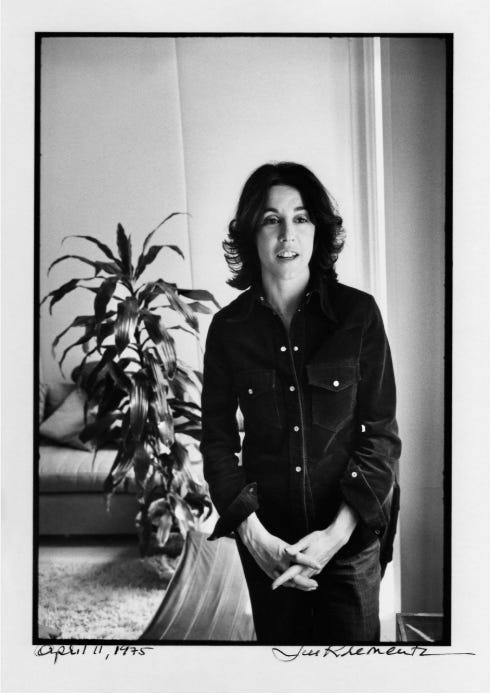
Nora Ephron is one of my heroes. She moved from newspaper columns to Esquire features to novels that made readers in 1970s America gasp to screenplays that made viewers in 1980s America laugh because she understood one truth.
“Everything is copy,” she later wrote.
Your life is worth sharing, too.
How?
Well, try these three things.
1) You journal.
Every day and about what you’re fearful of and hopeful for.
The only way to understand your stripped-down raw-ass self is to write toward it, every day.
2) In your public writing, you write about the subjects that deeply align with your pains and hopes and fears and lived experiences.
You accentuate this in your fiction and relay it honestly in any first-person essay. In any piece of journalism, your fears and aspirations become the grist for you to seek out story subjects who have the same view of the world.
You then write about those people.
3) You include the thing you know you shouldn’t.
For instance, I chose to open the Birmingham book present-day, with my fear and frustration. My fear that my kids could still, in the 21st Century, be killed for the color of their skin. My frustration that in the 21st Century I was questioned, and by so-called progressives, whether I had the right to tell the story of people whose lives I viewed as heroic because the color of my skin was different than theirs.
More than two years after the book’s release, what tends to resonate with readers most are those sequences in the prologue and epilogue where I’m relaying my fear and frustration and, ultimately, my hope for my children and the nation.
Now, I initially didn’t think I should include any of my story in that historical account of Birmingham.
But when one book editor asked very early on what gave me the right as a white man to write about Martin Luther King Jr and Fred Shuttlesworth and Wyatt Walker, knowing full well I’m the head of a black household and wanted to find a way to inspire my children after George Floyd’s death, well, when that book editor asked that question, I said, “Fuck it. There’s no way I’m not including my family’s story now.”
And because I did, I turned every single page of You Have to be Prepared to Die Before You Can Begin to Live into a deeply personal account, even when the word I never surfaced.
I wrote less from my fingers than my soul, simply because I’d included passages that I thought were too raw, too close to me.
The raw stuff tends to be the best stuff and inspire everything else.
Or, as Ephron would put it, the raw stuff is where everything is indeed copy.
Where everything is indeed fuel.
Quote of the Week: “A blazing fire makes flames and brightness out of everything that is thrown into it.”
—Marcus Aurelius, Meditations
Have a great weekend, I’ll be back next Friday.
This email requires a lot of man hours. Consider offsetting that by subscribing above and buying one of my books. Publisher’s Weekly says of the latter that you’ll be “riveted from the first page to the last.” The New York Times says, “The richness of Kix’s dramatis personae simply staggers.” The book was named to Amazon’s and The New York Times’ and Kirkus‘ respective Best Books of 2023 lists. To the extent that’ll move you.
Book No. 3 will be out when it’s out, people. Don’t rush me.